
Help us improve
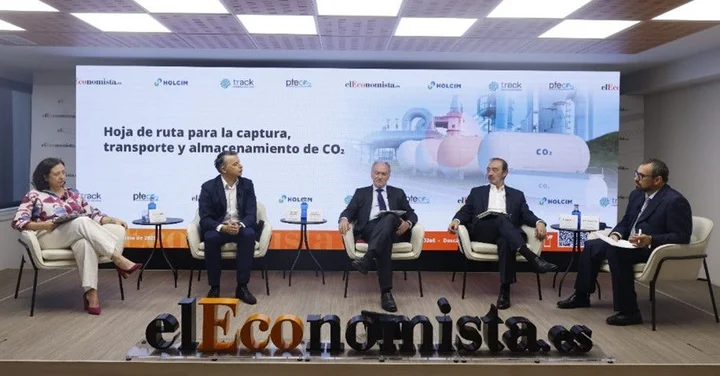
Antonio Llardén, Chairman of Enagás, emphasised that the robustness of the Spanish gas system guarantees security of supply in Europe in the current geopolitical context. “Thanks to Spain’s regasification terminals, we have been able to source supplies from 14 different countries this year. “Very few countries can do that”, he stressed at the seminar organised by the College of Economists of Catalonia on 13 July 2026 in Barcelona.

The resilience provided by gas infrastructure is particularly valuable in the face of geopolitical tensions in the Persian Gulf. Mr Llardén observed that the current situation is characterised by a “structural crisis of volatility, which has a significant impact on prices, particularly in Europe, rather than on the availability of raw materials”.
During a discussion titled ‘Energy Infrastructure and Europe’s Strategic Autonomy’ with the Chairman of the Committee of Business Economists and Chairman of Saba, Salvador Alemany, Antonio Llardén emphasised that Spain ranks third in the world for the number of LNG terminals, behind only Japan and South Korea.
“The basis of all this is a meshed gas network, like the internet,” he asserted. He has also said that Spain accounted for around 40% of Europe’s total storage and regasification capacity, and its international connections with North Africa, Portugal and France broaden supply options and strengthen energy security.
Help us improve